


Human Capital
Thai AirAsia strives towards creating the best possible work environment and culture while fostering teamwork. We treat our staff with respect and acknowledge their individuality. Employment, promotion and transfer are all based on merit and with the aim that everyone can reach their full potential.


Human Capital Management Process
Human Resource Management Goals and Objectives
The Company policy of managing human capital and developing employee engagement and retention consists of the following:


Improving organisation effectiveness and efficiency

Create healthy succession pools (size & readiness) and high-potential pools with the right skill sets

Building and sustaining a high-performing and productive workforce

Strengthening engagement, leadership & culture

Employment Policy
At Thai AirAsia, we believe that our employees are the heart of our success. We are committed to fostering a safe, fair, and inclusive work environment, guided by international standards as our operational benchmark.
- Fair Recruitment & DEI
- Diversity, Equity, and Inclusion (DEI): We provide equal opportunities to all applicants. We do not discriminate based on race, religion, gender, age, disability, or sexual orientation.
- Transparent Process: Our selection process is merit-based, focusing on skills, experience, and potential to ensure we recruit the most suitable talent in a fair and professional atmosphere.
- Labour Rights and Working Conditions
- Fair Remuneration: We provide fair compensation (Living Wage) aligned with professional skills and industry standards. This includes bonuses and comprehensive welfare packages that support healthcare and overall well-being.
- Zero Tolerance for Forced and Child Labour: We strictly prohibit all forms of forced labour, human trafficking, and the employment of individuals under the legal working age across our entire supply chain.
- Employee Development & Welfare
- Lifelong Learning: We invest in our people by providing budgets and dedicated time for upskilling and reskilling, empowering our employees to grow alongside the organisation.
- Occupational Health and Safety: We maintain rigorous safety standards to ensure every employee works in an environment free from health risks and workplace accidents.
2025 Employment Structure

Total Employee

Total Remuneration

AverageMonthly Salary

Remuneration Ratio (Male: Female)
Note:
- Employee compensation consists of salary, bonuses, overtime pay, and other forms of remuneration, excluding employer contributions.
- All remuneration and salary figures are reported as gross numbers (total amounts before any taxes, social security, or other statutory deductions).
Employees by Age, Gender and Position 2025
(People)
| Age | Operational | Managerial | Senior Management | Total | ||||
|---|---|---|---|---|---|---|---|---|
| Female | Male | Female | Male | Female | Male | Female | Male | |
| < 30 | 503 | 455 | 5 | 2 | - | - | 508 | 457 |
| 30 - 50 | 1,467 | 2,115 | 134 | 421 | 2 | 7 | 1,603 | 2,543 |
| > 50 | 12 | 73 | 16 | 211 | 2 | 4 | 30 | 288 |
| Total | 1,982 | 2,643 | 155 | 634 | 4 | 11 | 2,141 | 3,288 |
2025 Employees by Nationality and Base Location

Thailand

China

Vietnam

India

Myanmar

Cambodia

Japan

Republic of Korea

Macao

Laos

Nepal

Malaysia

Brazil


No. of outsourced employees in 2025

Proportion of Outsourced Employment to Total Employment (%) in 2025
Our Culture
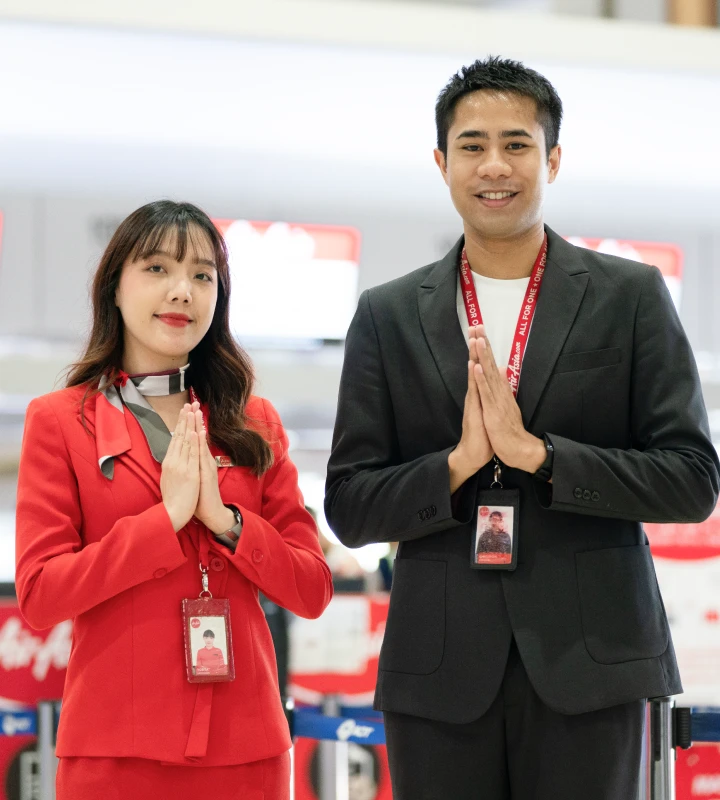
Customer Obsessed
A Place for Personal Growth

Playing to Win as a Team

Wellbeing at Work

A Connected Community
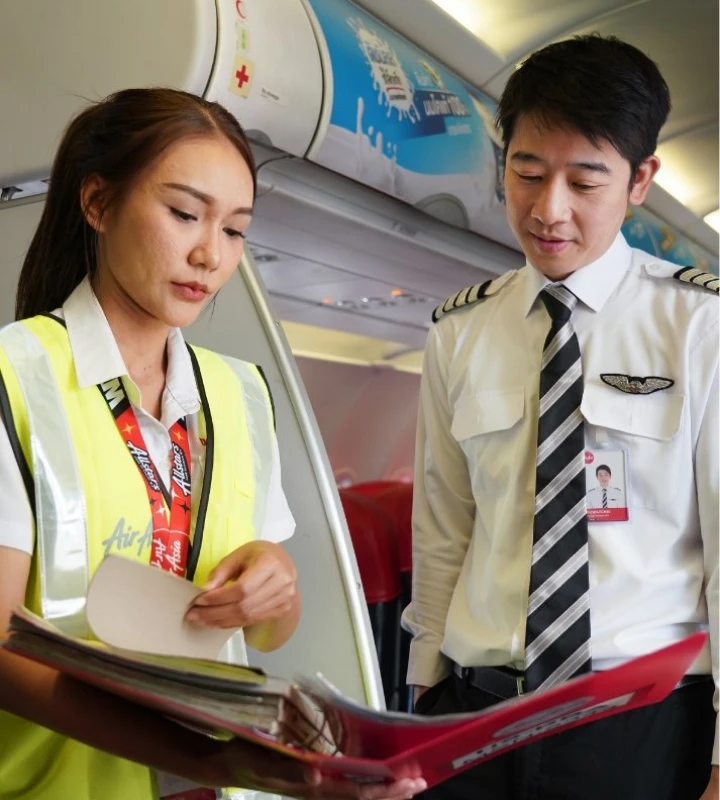
Respect for All
Our Values
-
01
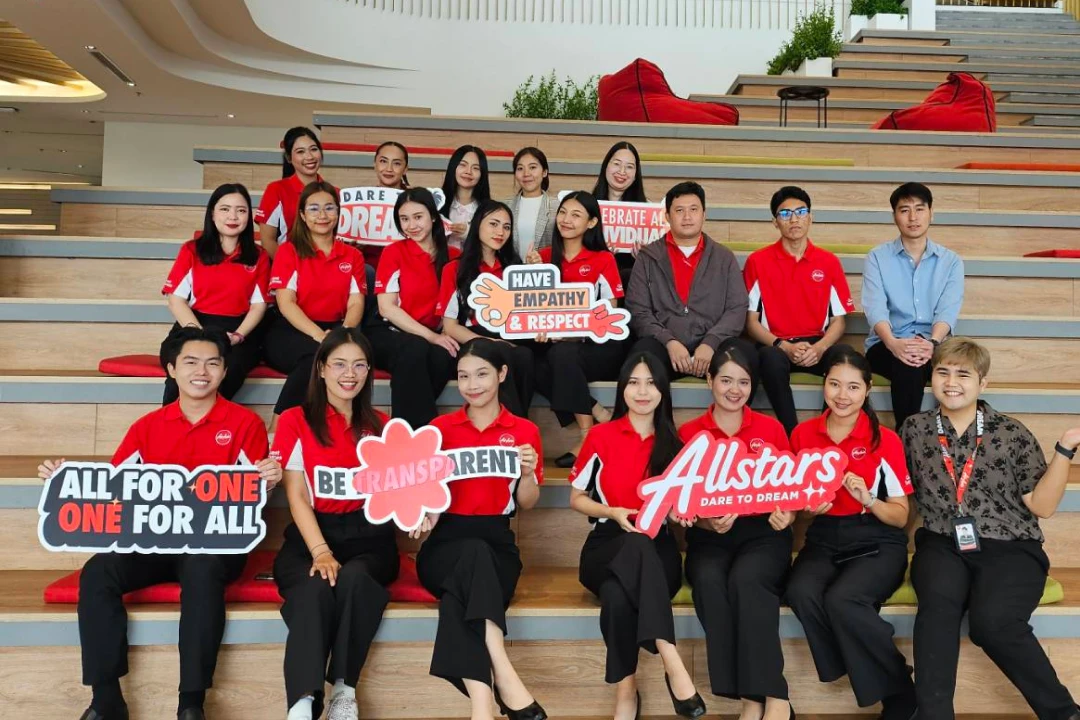
All for one, One for all
We are always better together. We Win as One. -
02
Dare to dream
Dream the impossible. Believe the unbelievable. We Dare to Dream. -
03
We make a difference
Get stuff done. Be passionate. -
04
Keep it simple
That's it! -
05
Be transparent
Let's communicate with trust and honesty. -
06
Have empathy and respect
We listen, we care, we treat each other with empathy and respect. -
07
Celebrate all individuals
People and their talents are at the heart of it all. That's why we Celebrate All Individuals. -
08
Safety is #1
Safety first, safety always!


Human Rights Commitment
Thai AirAsia is committed to conducting its business with integrity, strictly adhering to the United Nations Guiding Principles on Business and Human Rights (UNGPs) and the International Labour Organization (ILO) Declaration on Fundamental Principles and Rights at Work.
We foster an inclusive environment that promotes Diversity, Equity, and Inclusion (DEI). We maintain a zero-tolerance policy towards all forms of discrimination in recruitment, development, and promotion, as well as a strict prohibition of forced labour, human trafficking, and the employment of individuals under the age of 18.
Our Strategic Approach:
- Human Rights Due Diligence (HRDD): We go beyond simple monitoring by conducting regular, comprehensive risk assessments across our entire value chain, including operations, contractors, and supply chain partners.
- Integration and Governance: Human rights are integrated into our core resource management, fair remuneration practices, and employee welfare schemes. These are overseen by a dedicated committee responsible for auditing and recommending continuous improvements.
- Safeguarding Children’s Rights: We are committed to the elimination of child labour across our entire value chain. Beyond mere compliance with age requirements, we support the well-being of our employees' families and ensure our marketing and services are safe for children, upholding their right to protection and development.
- Grievance Mechanisms: We provide secure, confidential channels for employees and stakeholders to report concerns, ensuring that remedy and protection are available to anyone affected by our operations.
Human Rights Due Diligence
The company recognises the importance of respecting human rights across all dimensions of our business operations. We are committed to enhancing our human rights governance framework to ensure greater clarity and a more systematic approach. Over the past year, the Company has successfully conducted:
- In the Q4/ 2024 - Q1/2025: the company initiated a comprehensive Human Rights Due Diligence (HRDD) process and conducted internal risk assessments. These efforts focused specifically on high-risk groups, including employees, customers, suppliers, and local communities.
- In the Q2: of last year, the People and Culture Department integrated the results of the human rights risk assessment and mitigation measures into an operational plan and reviewed them quarterly in collaboration with the Sustainability Working Group of Thai AirAsia to monitor progress and close operational gaps.
- In the Q4: the Training Management Center Department launched a mandatory E-learning course titled 'Human Rights & Harassment SHIELD.' This programme is designed to provide all employees including managers with a fundamental understanding of the company’s human rights policy, relevant laws, and training on bullying or harassment handling in the organisation


Number of employees trained in “Human Rights & Harassment SHIELD” in 2025

Management level

Executive level
Human Rights Risk Assessment
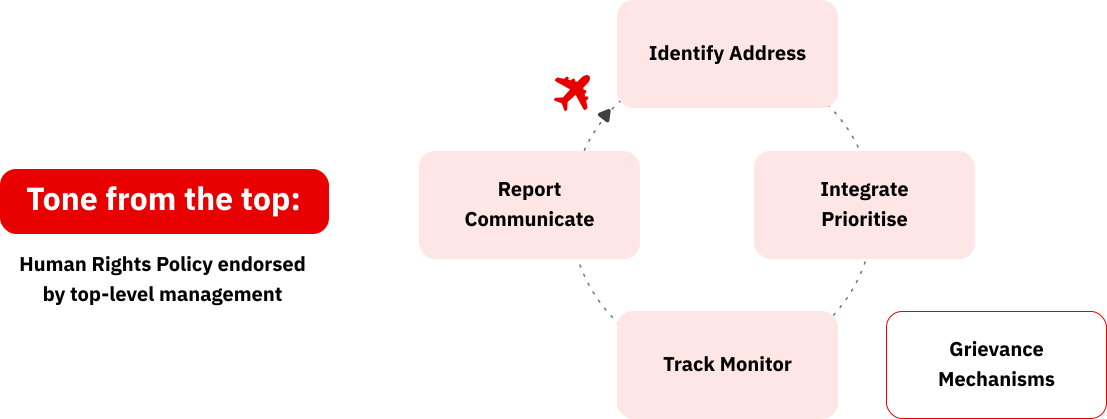
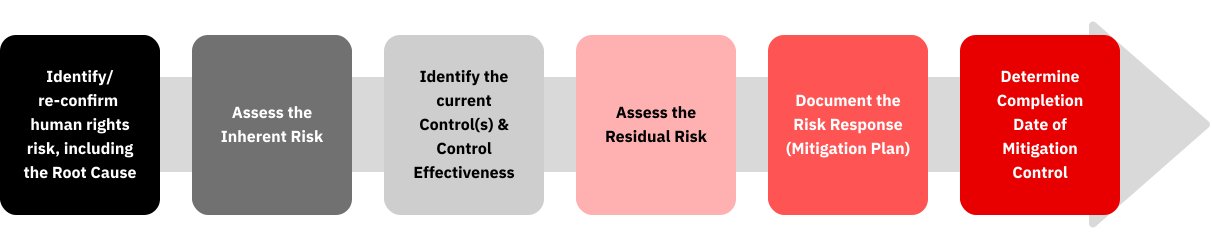
In the fourth quarter of 2024, the company initiated a human rights risk assessment and conducted workshops with internal departments and four key stakeholder groups—namely employees, the supply chain, customers, and local communities—to identify and assess risk issues and collective impacts in the first quarter of 2025. The risk assessment process is outlined as follows:
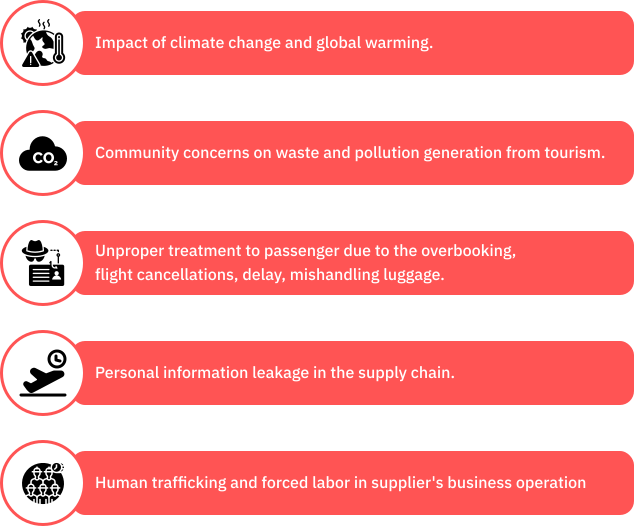
Summary of Human Rights Risk Assessment and Management Measures
| Human Rights Salient Issues | Mitigation Measures |
|---|---|
| 1. Impacts of Climate Change and Global Warming | Implement eco-friendly innovations and execute a Net-Zero Strategy to eliminate greenhouse gas emissions. |
| 2. Community concerns regarding waste and pollution from tourism | Implement environmental initiatives, such as the “Journey D” project, the “Zero Waste to Landfill” programme, and provide human rights training and education for local communities. |
| 3. Inappropriate treatment of passengers (resulting from overbooking, flight delays/cancellations, and lost baggage) | Develop Service Recovery guidelines in compliance with CAAT regulations and foster a corporate culture rooted in equality. |
| 4. Personal Data Breaches within the Supply Chain | Establish cybersecurity requirements in vendor contracts, provide Personal Data Protection Act (PDPA) training, and perform regular system testing. |
| 5. Human Trafficking and Forced Labor in the Supply Chain | Strictly enforce labor conditions in procurement contracts and drive supplier compliance with the Supplier Code of Conduct. |
The result of the human rights risk assessment shows that there is no human rights risk at the very high level, however, there are some human rights risks that remain salient, and require further attention, the risks are:"
Detailed methodology and results of human rights risk assessment can be found on this link
Diversity, Inclusion and Equal Opportunity
Thai AirAsia maintains policies that promote a diverse, inclusive and equal work environment, viewing each employee as a valuable asset to its success. In light of this, the Company fosters a positive culture in which employees are treated with dignity and respect towards their individuality. Employment, promotions and transfers are based on merit and performance to ensure equal treatment and no discrimination against gender, age, ethnicity, origin, sexual orientation and disability.
Moreover, the Company complies with the Empowerment of Persons with Disabilities Act and has provided employment opportunities to 50 disabled persons. Thai AirAsia even received the 2025 Disabled Persons Employment Promotion award from Friendly Design for All Foundation.

Female Employees Comprised

Manager Level and Head of Department Level
2025 Performance
Disabled Persons Employed (Persons)
Seniors Over 60 Employed
Seniors over the age of 60 years are considered for employment only in cases in which the individuals possess specialised and necessary traits or skills, such as aeronautical engineers or flight instructors. The employment of individuals over 60 years of age is as follows:
Seniors Over 60 Employed (Persons)
Employee Satisfaction (eNPS: employee Net Promoter Score)
Over the past year, we have remained committed to a sustainable work environment. Our annual Employee Engagement Survey highlighted several key successes and strategic focus areas:
- Key Strengths: Employees reported high satisfaction in Career Growth, Contribution, and Pride.
- Improvement Areas: We are addressing Compensation and Fairness through salary reviews and transparent people management. To improve Productivity and Workload, we are optimising processes and manpower planning to prevent burnout.
Executive Management has integrated these insights into our "Performance and Quality of Life" strategy. Additionally, we continue to mitigate labor and safety risks through rigorous assessments and Management of Change (MOC) protocols for new operations.

Employee Net Promoter Score (eNPS) (Target: 35)
Voluntary Employee Turnover Rate (Target: <5%)
Employee Turnover
The Company aims to constantly improve employee engagement and retention, targeting a turnover rate of no more than 5% per year and the retention of employees in key positions to ensure its business continuity.
The voluntary employee turnover rate in 2025 was 3.9%, a 36% decrease from the previous year, meeting our target.
Employee turnover reduced significantly this year compared to the previous year. Surveys showed employees have a clear understanding of their duties and their connection to the targets and strategies of the Company. Employee pride in the Company also rose.
Employee Development
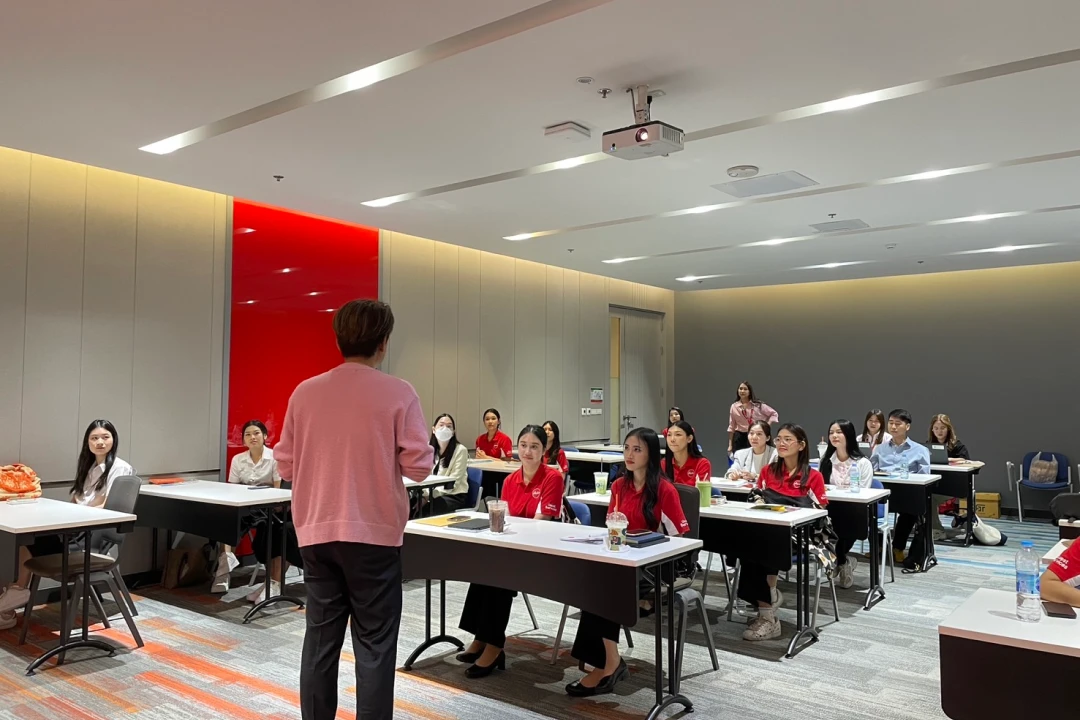
Thai AirAsia developed its Training Management System to facilitate the training of employees in work skills and competencies required by law, for the efficient staging of classes, recording of results and test scores, and to notify learners to review their lessons for the maintenance of operational licences. All employees are provided fundamental operational training in accordance with their department. Targets for training are as follows:
Total Number of Employees Trained in 2025

| Skill Type | Target Training Hours per employee per year | Result in 2025 |
|---|---|---|
| Specialised | Approx. 24 hours/year | Approx. 24 hours/year |
| Fundamental | Approx. 17 hours/year | Approx. 20.5 hours/year |